Choosing a Serving Tray by Weight, Feel and Care
Compare wood, metal and ceramic serving trays by weight, surface feel and care to choose one suited to your table, carrying route and usual use.
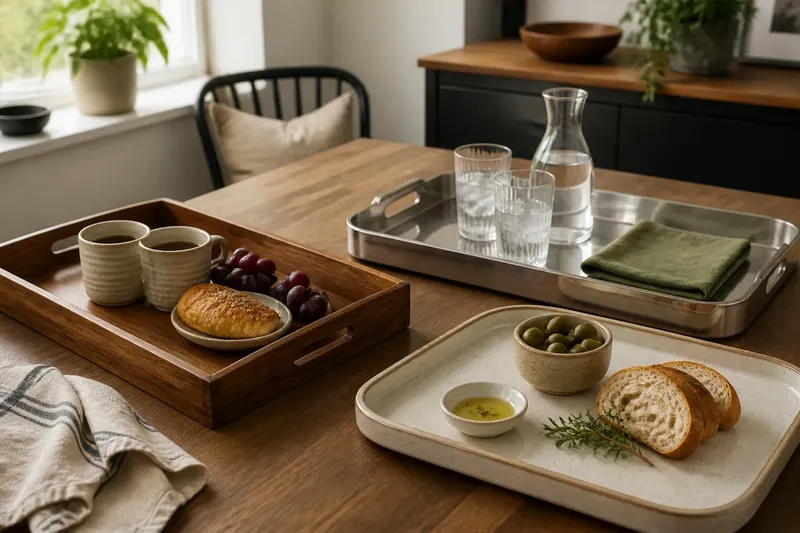
The common mistake with a serving tray is choosing by appearance alone: a handsome surface can feel awkward in the hand or demand more care than its routine deserves. A serving tray made from wood, metal or ceramic behaves differently under a cup, across a room and beside a sink. Think first about where it will travel and what you expect to carry, then consider the material’s character.
Begin with the route
A tray used to carry mugs from kitchen to sofa has a different job from one that stays on a dining table to hold bread or condiments. The first needs to feel manageable in motion, with a shape and rim that help contain its contents. The second can be chosen more freely for the way it sits among plates and serving dishes.
Notice the route itself. A narrow doorway, a turn around a chair, or a short flight of stairs makes awkward handling more apparent. A tray that lives on a sideboard may be lifted only occasionally; one used for breakfast may be picked up repeatedly and washed often. The best material is not an abstract winner. It is the one whose weight, surface and upkeep fit the habit.
Also think about what goes on it. A few dry pastries place different demands on a tray from glasses with condensation or a bowl of warm soup. You do not need to predict every possible use, but a realistic picture of the ordinary one can rule out mismatches.
Wood serving trays
Wood often feels warm and slightly yielding in the hand, even when the tray is rigid. Its grain gives the surface visual variation, and small marks tend to read as part of a changing material rather than as a bright scratch on a polished field. That can suit a relaxed table or a tray used regularly for bread, fruit and cups.
Weight varies with the wood, thickness and construction. A broad, solid tray can feel substantial, while a thinner one with a raised rim may be easier to carry. Handles cut into the sides can make lifting more comfortable, though they also change how much usable surface remains. Pick the tray up before deciding; the difference between a reassuring heft and an unwieldy load is personal.
Wood asks for a little attention to moisture. Spills are best wiped away rather than left to sit, and soaking or prolonged dampness can affect the finish or joints. Some wooden trays are sealed; others are treated with oil or left more open. Follow the maker’s care directions, especially before using detergent or applying a fresh finish.
It is not worth trying to keep a frequently used wooden tray immaculate. A few signs of use are ordinary, and aggressive scrubbing can do more harm than a prompt, gentle clean. If the tray is likely to meet wet glasses or sticky sauces, consider whether you are comfortable wiping it soon after serving.
Metal serving trays
Metal can feel cool, smooth and crisp under the fingertips. Stainless steel is often chosen for a plain, workmanlike surface; aluminium can feel lighter; plated or lacquered finishes bring other visual qualities and may need more careful handling. The word “metal” covers quite different objects, so look at the finish and construction rather than assuming all metal trays behave alike.
A thin metal tray may be easy to lift but can flex or ring when set down. A heavier, rigid tray feels steadier, though its weight becomes noticeable when loaded. Raised edges help keep small items in place, and rolled or rounded rims can feel more comfortable than a sharp-looking edge. Handles are useful only if they leave enough room for a natural grip.
Metal is straightforward to wipe after many everyday spills, but its finish matters. Abrasive pads can dull or scratch some surfaces; acidic foods or standing moisture may be unsuitable for particular coatings or metals. Check the product’s care instructions before putting a tray in a dishwasher or using it for direct contact with food. A decorative finish is not automatically a food-safe surface.
On a table, metal can make a serving arrangement feel more formal or visually cool. A cloth napkin, wooden board or ceramic bowl can soften that impression without changing the tray’s practical role. This is a matter of contrast, not a reason to buy accessories just to correct a tray that does not suit your room.
Ceramic serving trays
Ceramic has a firm, cool surface and a sense of visual permanence. Glazed stoneware may feel smooth and colourful; unglazed areas can feel drier or more textured. A ceramic tray can make a small grouping of cups or snacks feel deliberately arranged, especially when it remains on a table rather than being carried far.
Its weight is often the deciding factor. Even a modest ceramic piece may feel dense compared with a thin metal tray or a light wooden one. That weight can be pleasant when the tray is stationary, but it may make a loaded carry less comfortable. Ceramic can also chip or crack if struck against a hard counter, so think about the route and the way you tend to set things down.
Glazed surfaces are generally easy to wipe, while joins, feet or textured details may collect crumbs. The underside matters too: an unglazed base may scratch a polished tabletop unless it has suitable pads. Check how the tray rests before putting it on a delicate surface, and follow the manufacturer’s directions for washing and food contact.
Ceramic suits serving that happens close to where the tray is stored. It can hold a neat arrangement on a coffee table or dining surface, but is less compelling if the main task is carrying several filled drinks through a busy room. The material’s visual appeal should not disguise the load you will actually lift.
Three questions about serving trays?
Which tray is easiest to carry?
There is no universal answer: a light tray can be easier to lift, but a rigid tray with a comfortable grip may feel more controlled. Try the empty tray in your hands and imagine its usual contents before choosing.
Which material handles spills best?
Metal and glazed ceramic are often simple to wipe, while wood benefits from prompt attention to moisture. Finishes differ, so the care directions for the particular tray matter more than the material name alone.
Can a serving tray be used for food?
Use it for direct food contact only if its maker identifies the surface as suitable. Otherwise, place food on plates, bowls or boards and use the tray to carry or gather them.
Does a heavier tray feel more stable?
Weight can make a tray feel solid when it rests on a table, but it also adds to the load when carried. A firm base, well-shaped rim and balanced grip matter alongside heft.
Match the material to use
Say you serve tea in a small flat, carrying two cups from a narrow kitchen to a sofa and setting the tray down on a wooden coffee table. You might favour a light, rigid metal tray with a smooth, wipeable finish and a rim that helps contain the cups. If the tray is mainly for biscuits and mugs on a sideboard, a wooden one may feel more inviting; if it will stay in the centre of a table, ceramic may be the more satisfying choice.
That is not a rule about rooms or styles. It is a way to check the real task: lift, turn, set down, wipe. The same person may reasonably choose different trays for different places, rather than asking one object to serve every purpose.
- For frequent carrying: compare the empty weight and grip, then consider the loaded weight you expect to lift.
- For wet glasses: favour a surface you can wipe promptly and are comfortable maintaining.
- For a stationary centrepiece: give greater weight to surface character, colour and how the base rests on the table.
- For delicate finishes: check the underside, edge and cleaning directions before regular use.
- For mixed serving: choose a useful rim and enough clear surface for the dishes you normally carry.
Let habit decide
Wood offers a tactile, forgiving presence but rewards prompt care. Metal gives a cool, clean feel and often wipes readily, though thinness and finish can change its character. Ceramic brings visual weight and a firm surface, but asks more of the person carrying it. These distinctions make the material a practical choice as much as a decorative one.
For a serving tray, start with the route, the load and the cleaning you will actually do. Then choose the finish you enjoy seeing and touching. A tray that suits its regular task is more likely to earn a place in daily use than one selected only for its first impression.