When the Cup Became a Personal Object
When did cups become personal objects? Trace how household routines, institutional rules and changing ideas about sharing made separate cups feel ordinary.
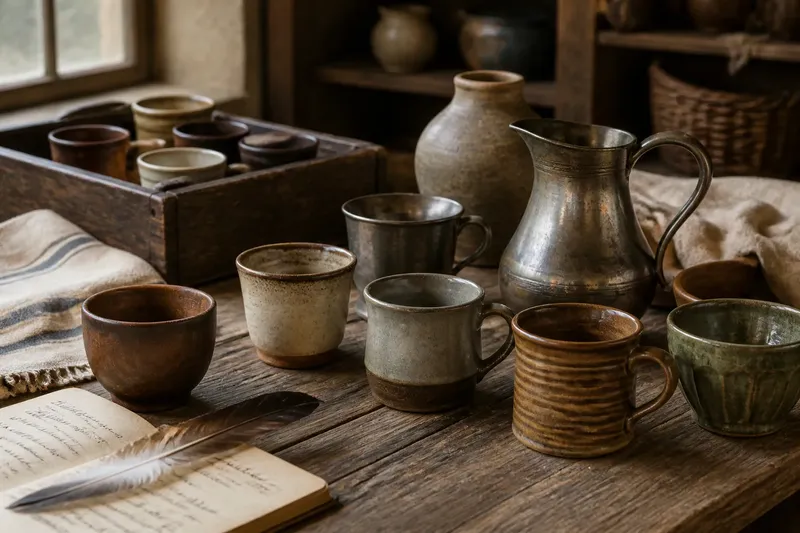
The common mistake is to imagine that cups became personal as soon as people began to worry about cleanliness. In the history of the personal cup, the evidence points instead to a gradual, uneven shift: a vessel might be kept for one person at home, shared at work and offered to guests elsewhere. The cost of treating this as a single turning point is that it hides how ordinary routines gave objects their boundaries.
Personal cups in history
There is no single date when cups became personal objects. The surviving evidence is fragmentary, and practices varied by place, household and occasion. A vessel’s use could depend on its material and value, how many cups were available, and whether drinking took place at home, in an inn, at work or during a ceremony.
Household inventories and surviving vessels can tell us what people owned, but they do not always tell us who drank from each cup. A cup listed among household goods may have been used by several people, reserved for a guest or regularly associated with one family member. Ownership, access and habitual use are different things.
That distinction makes a cautious account more useful than a broad claim about what everyone did. A cup could become personal through repeated use and other people’s recognition, without being bought by its user or marked with a name. The object’s social history often mattered as much as its material form.
Why cups were shared
Where vessels were costly to make, difficult to carry or limited in number, sharing could be a practical arrangement. One cup beside a water jug might serve a household; a common vessel could circulate among people working or travelling together. These possibilities should not be mistaken for a universal custom: the details depended on the setting and the resources available.
Sharing could also communicate hospitality or membership. A host offering a drink and a group passing a vessel created a visible social exchange. But the gesture did not mean the same thing in every community, and convenience could matter as much as symbolism.
Nor does the presence of shared cups prove that people ignored cleanliness. They might rinse, wipe or reserve vessels according to local practice and available water. Without specific evidence for a particular household or institution, it is safer to describe these as possible habits than to claim they were universal.
Daily routines and separate vessels
When more cups were available in a particular household or institution, people could drink at the same time rather than wait for a vessel to be passed around. Separate cups also made it easier to pour individual portions. These practical changes could make individual use feel ordinary without requiring anyone to declare ownership.
The arrangement changes a meal’s rhythm in a small but tangible way. A shared cup creates turns; a cup for each person lets each drink at their own pace. The group can remain together, but serving no longer depends on the vessel moving from hand to hand.
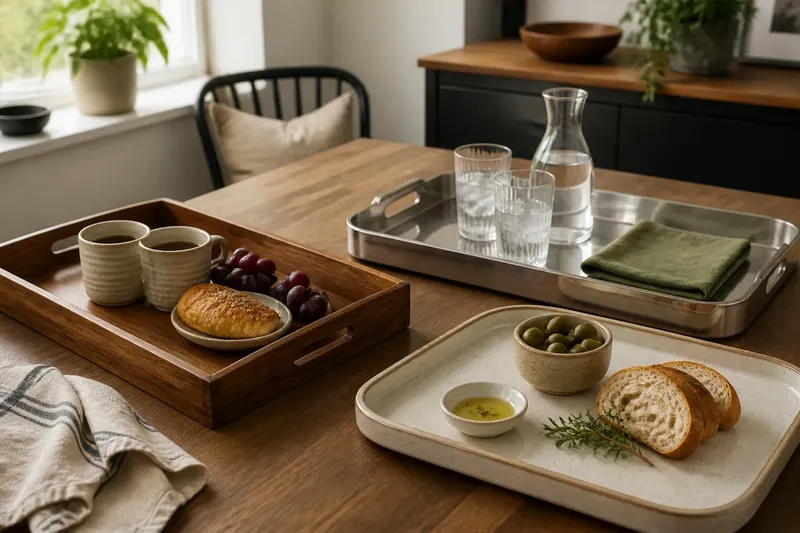
Say a household has one sturdy cup beside its water jug and decides to set out a cup for each person at supper. Someone gathers the extra vessels, places them by the jug and pours into each one; at the meal, people can drink without waiting for the shared cup to return. The trade-off is more washing and storage, while the observable result is a serving routine with fewer pauses.
Ownership and familiar use
A cup repeatedly used by one person may become associated with a familiar place, drink or time of day. If other household members recognise that pattern, taking the cup can feel intrusive even when it is inexpensive and replaceable. Such informal boundaries do not require legal ownership.
Institutions can create similar distinctions. A school, workplace or household might assign a cup to one person while retaining ownership of the vessel. In that case, “personal” describes an expected pattern of use, not a transfer of property.
A cup can also indicate how a space is organised. One vessel kept at a worker’s station suggests a different arrangement from cups drawn from a common shelf. The difference may reflect convenience, care or status; the object alone cannot tell us which explanation applies.
Hygiene and individual use
Concerns about cleanliness helped make separate drinking vessels persuasive in some settings, but hygiene cannot explain the whole change. Public authorities, schools and employers could promote individual cups as a rule of conduct when concerns about shared contact became more prominent. The timing and reach of such rules varied, so they should be tied to particular places and records rather than treated as one universal campaign.
Separate vessels also depended on practical arrangements: a supply of cups, somewhere to store them and someone to clean them. A cleanliness rule could reinforce individual use where those arrangements existed, but it did not create them from nothing. Shared vessels could remain in use in other settings or for particular occasions.
It is not worth searching for one invention or campaign that instantly made cups personal. Without evidence for a specific place, a more revealing question is who supplied, cleaned and used the cups, and what the rules of access were.
Shared cups in context
Shared vessels remained useful where people needed to drink together without carrying individual equipment. A household might use personal cups for daily meals and a serving vessel for a gathering; a workplace might provide common supplies. These are plausible arrangements, not claims that every household or workplace followed the same pattern.
Communal drinking can also be part of a social or ceremonial act. A toast or a cup offered to a guest makes participation visible, though sharing a ritual does not always mean drinking from the same vessel. Customs differ, and the object’s role depends on the occasion.
Even now, a reusable bottle is commonly treated as one person’s possession, while a jug on a shared table serves several people. The form of the vessel matters less than the expectation surrounding it: who may use it, who refills it and who is expected to wash it.
Questions about personal cups?
When did cups become personal objects?
There was no single turning point that applies everywhere. Individual use became ordinary unevenly, as routines, available vessels and local expectations changed.
Did every person own a cup?
No. A cup might be set aside for one user while remaining the property of a household, school or workplace. Personal use and legal ownership are separate questions.
Were shared cups always considered unhygienic?
No. Ideas about cleanliness and acceptable contact varied by setting and period. Hygiene concerns strengthened the case for separate vessels in some places, but they do not account for every practice.
What makes a cup feel personal?
Repeated use, a familiar place and other people’s recognition can establish a personal association. A name or decoration may help, but neither is necessary.
Reading the ordinary cup
The history of the personal cup is best read through the small arrangements that surrounded it: where it stood, who reached for it and who maintained it. Those clues can help distinguish a shared household possession from a vessel reserved for one person, while still leaving room for uncertainty when records are thin.
To understand when the cup became a personal object, look beyond the vessel to the routine. A cup can mark individual space without ending a shared meal; the useful distinction is not simply private versus communal, but who was expected to use it next.